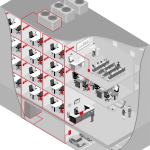
Building automation has become a cornerstone of modern facility management, enabling smarter monitoring and precise control of building systems. By integrating HVAC, lighting, energy, and security into a unified platform, building automation systems (BAS) improve operational efficiency, occupant comfort, and sustainability.
What Is Building Automation?
Building automation refers to the centralized monitoring and automated control of a building’s mechanical, electrical, and electromechanical systems. Through sensors, controllers, and intelligent software, facilities can operate efficiently with minimal manual intervention.
The Role of Monitoring in Building Automation
Real-time monitoring provides complete visibility into building performance. Data collected from sensors and equipment allows facility managers to:
- Track energy consumption and system status
- Identify inefficiencies and abnormal behavior
- Monitor indoor environmental conditions such as temperature and air quality
- Receive alerts for faults or performance deviations
Continuous monitoring ensures informed decision-making and proactive management.
Benefits of Automated Monitoring and Control
- Improved energy efficiency and reduced operational costs
- Enhanced occupant comfort and productivity
- Early fault detection and reduced maintenance costs
- Centralized control with real-time insights
- Scalable and future-ready building infrastructure
Future of Building Automation
With advancements in AI, IoT, and data analytics, building automation systems are becoming more intelligent and predictive. Future-ready buildings will not only monitor and control systems but continuously learn and adapt to deliver maximum efficiency and comfort.
Conclusion
Building automation through advanced monitoring and control is no longer a luxury—it is a necessity for efficient and sustainable building operations. By adopting intelligent automation, building owners can gain full control, reduce energy consumption, and create smarter, more responsive environments.